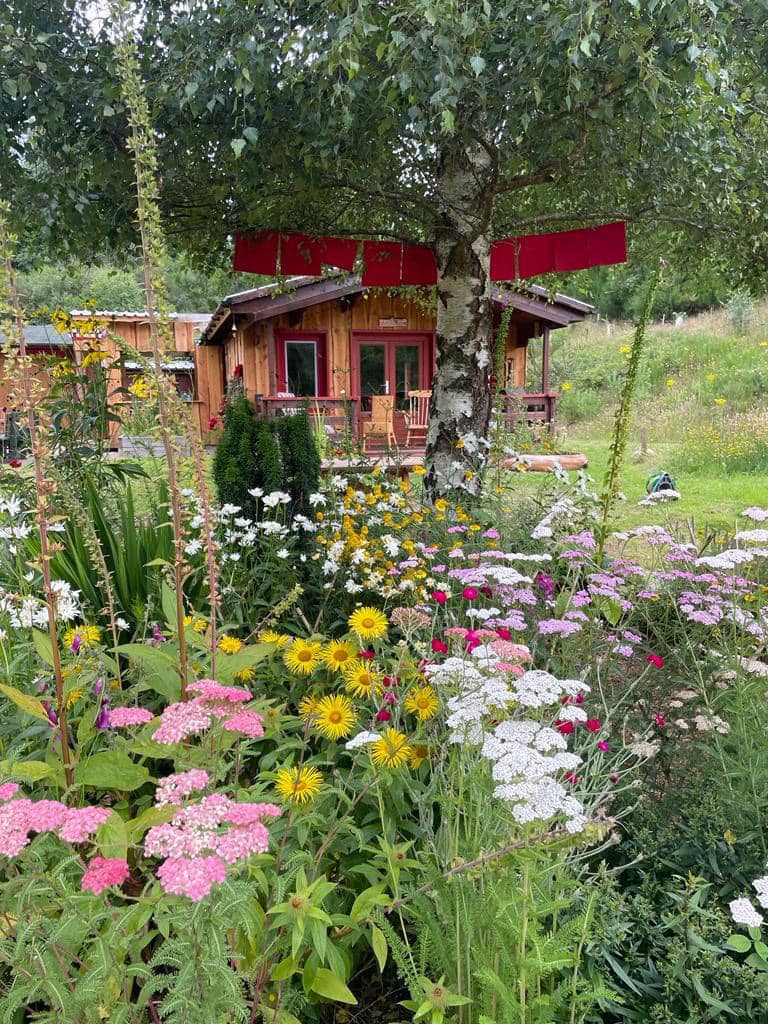
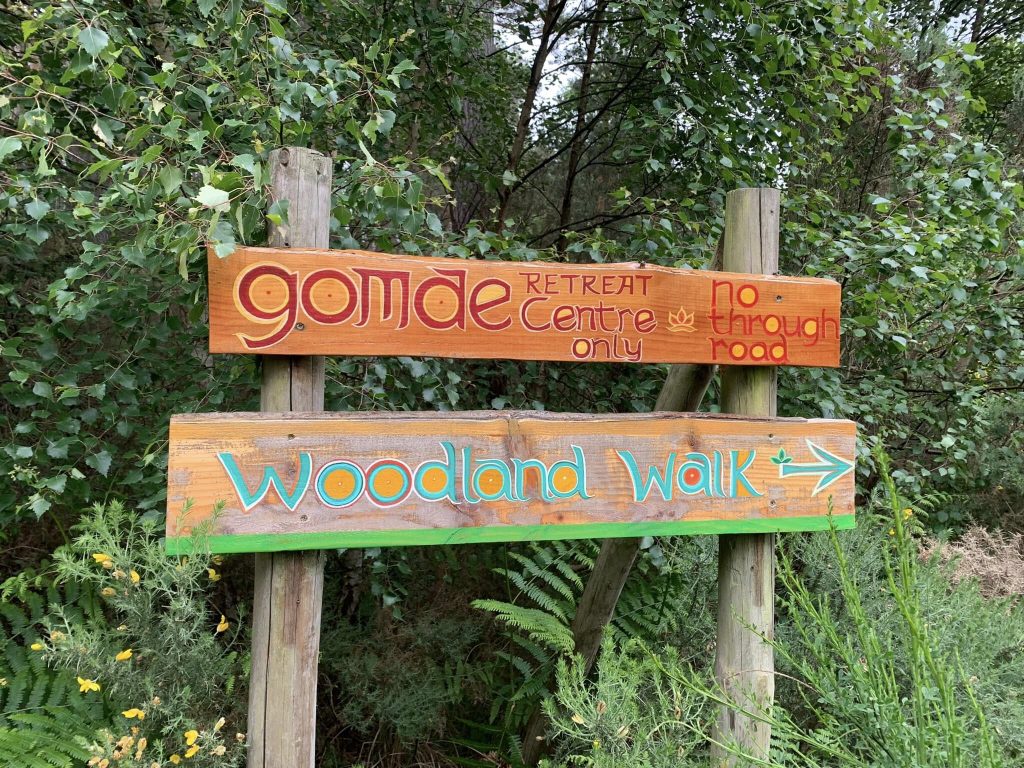
Gomde Scotland is a bespoke woodland hermitage, tucked into 50 acres of secluded broadleaf woodland in the Scottish Highlands, near Inverness and the Findhorn area. Planted with over 25,000 native trees — oak, aspen, chestnut, beech, juniper, cherry and more — the land was gifted to the registered charity, Rangjung Yeshe Gomde Trust SC040361, as a sanctuary for meditation, study and the deepening of contemplative practice.
A Place of Practice and Community
Gomde Scotland is part of an international network of Gomde centres, all sharing the vision of making the Buddha’s wisdom tradition genuinely accessible to a modern, international audience. We offer group retreats throughout the year, bringing together practitioners of all levels — from complete beginners to those with years of dedicated practice — in an environment of simplicity, peace and natural beauty.
Retreats at Gomde Scotland draw on the living richness of the Vajrayana (Tibetan) Buddhist tradition, blending guided meditation, dharma study, communal practice and solitary retreat. Our retreat programme is varied, welcoming, and grounded in the conviction that these ancient teachings remain profoundly relevant today.
In addition to international retreats, we host a regular programme of community events: weekly and monthly sangha gatherings, study and practice groups, volunteer days and seasonal celebrations. Whether you live locally or travel from afar, there is a place for you here.
Our Setting
The hermitage sits in a part of Scotland known for its clear skies, varied countryside and exceptional natural beauty. Rugged hills, moorlands, wild river ravines and long sandy beaches are all close at hand. Inverness Airport is less than 20 miles away, and the site is well served by public transport on the Inverness–Aberdeen route.
Inspiration and Lineage
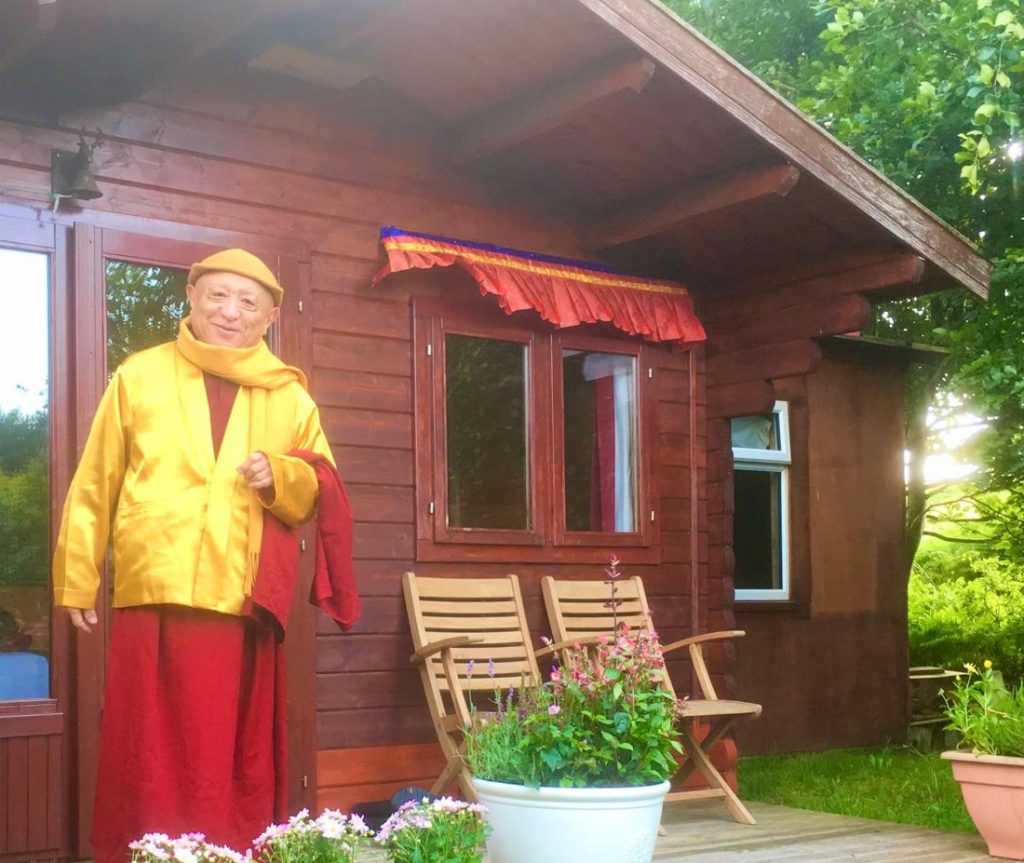
Chökyi Nyima Rinpoche, Abbot of Ka-Nying Shedrub Ling Monastery in Kathmandu, serves as the spiritual head of Rangjung Yeshe Gomde Trust worldwide. Gomde Scotland benefits from a living connection to highly qualified teachers in the Tibetan Buddhist tradition — a lineage that has been transmitted without interruption from teacher to student to this very day.
The Organisation
Rangjung Yeshe Gomde Trust is a charity registered in Scotland (SC040361), overseen by a board of trustees and run largely by a dedicated team of volunteers. The organisation is guided by values of transparency, communal care and a shared commitment to the land and to the people who come to practice here.
We are grateful to everyone who has helped Gomde Scotland come into being and flourish. May this woodland hermitage continue to serve as a sanctuary of refuge, practice and peace — for the benefit of all.
Charitable Aims
The advancement of religion and philosophy
• To provide a place of peace, refuge and regeneration suitable for meditation and retreat for persons of any faith.
• To support the preservation and advancement of Buddhism, specifically the non-sectarian tradition of Vajrayana (Tibetan) Buddhism.
• To make authentic teachings on meditation available on line and in the local area.
The advancement of environmental protection and improvement
• To set a positive public example by implementing sound, sustainable, organic, long-term policies in the management of Trust properties.
• To utilise micro project, renewable energy and encourage low environmental impact strategies in the Trusts activities and daily operations.
• To Protect and further develop local eco-systems and habitats able to support and encourage increased native biodiversity and protect indigenous wildlife.
The advancement of human health
• To support the overall well-being of body and mind through promoting meditation and healing practices as traditionally practiced in the Himalayan Region and provide education on the benefits of meditation and support the practice of meditation in retreat and for living and dying peacefully.
• To increase awareness of the value of traditional, herbal and medical traditions and the plants on which they are often based on and to further conservation efforts wherever they are endangered.
The prevention or relief of poverty
• To research, develop and support projects that help the poor in Himalayan countries.
• To provide social assistance, encourage sustainable conservation and promote cultural activities for the long-term benefit of people regardless of their race, religion or nationality.